Are 3D scale models worth the investment?
How to make a 3D scale model pay for itself: a clear goal, the right scale, suitable materials and logistics planned around trade shows and events.
 By Tesseract 3D MarketingPublished on 6 min read
In 30 seconds
- Start with what the scale model is for, because sales, investors or internal study each change everything else.
- The scale sets the level of detail and the final size, so choose it by what the piece has to show.
- At a trade show, think about transport and space: a compact model planned in modules costs less to take.
In this article
If you’re thinking about investing in scale models, the first thing to work out is how that money comes back. A scale model is more than a physical copy of a project. It can be a strong tool for explaining ideas and winning customers. This article goes through practical ways to make sure a 3D scale model is worth what you pay for it.
What matters in a 3D scale model
- Set a clear goal for the model. It steers every other decision.
- Choose the right scale, so the model doesn’t confuse anyone and the details that matter come across.
- Use good materials, so the model looks professional and lasts.
- Light it well: lighting makes the model stand out and photograph properly.
- Plan how it travels: a model designed in modules is easier to transport, set up and store.
Define your goal
Start with a clear goal before you put time and money into a scale model. If you don’t know what you want to achieve, the cost is hard to justify. So ask yourself: what is the model for? Is it for sales demonstrations, for presenting a project to investors, or just for internal study?
Why a clear goal matters
A well-defined goal is the first step towards a model that earns its cost. If you don’t know what you want to show, the model can end up as an expense nobody needed. A clear goal guides the work, from the choice of scale to the choice of materials.
How to assess the return on investment (ROI)
To assess the return on a scale model, look at:
- the likely increase in sales or in investor interest;
- the time and resources saved by spotting design problems early;
- what it adds to your presentation, making it clearer and more convincing.
Money is only part of the return. The rest is what the model brings to the project: clearer communication and a stronger impression on the people who see it.
How it changes the presentation
A well-made scale model can change how a project is perceived. It gives a tangible, detailed view that goes further than drawings and renders. A scale model can:
- make the project easy to grasp for people without a technical background;
- bring out the strong points of the design;
- leave a visual impression people remember.
Want to know whether a scale model pays off in your case?
Tell us the goal, send the 3D file or photos and say where the piece will stand. The technical analysis comes back with the scale, the material and the lead time.
Set the scale of the 3D model
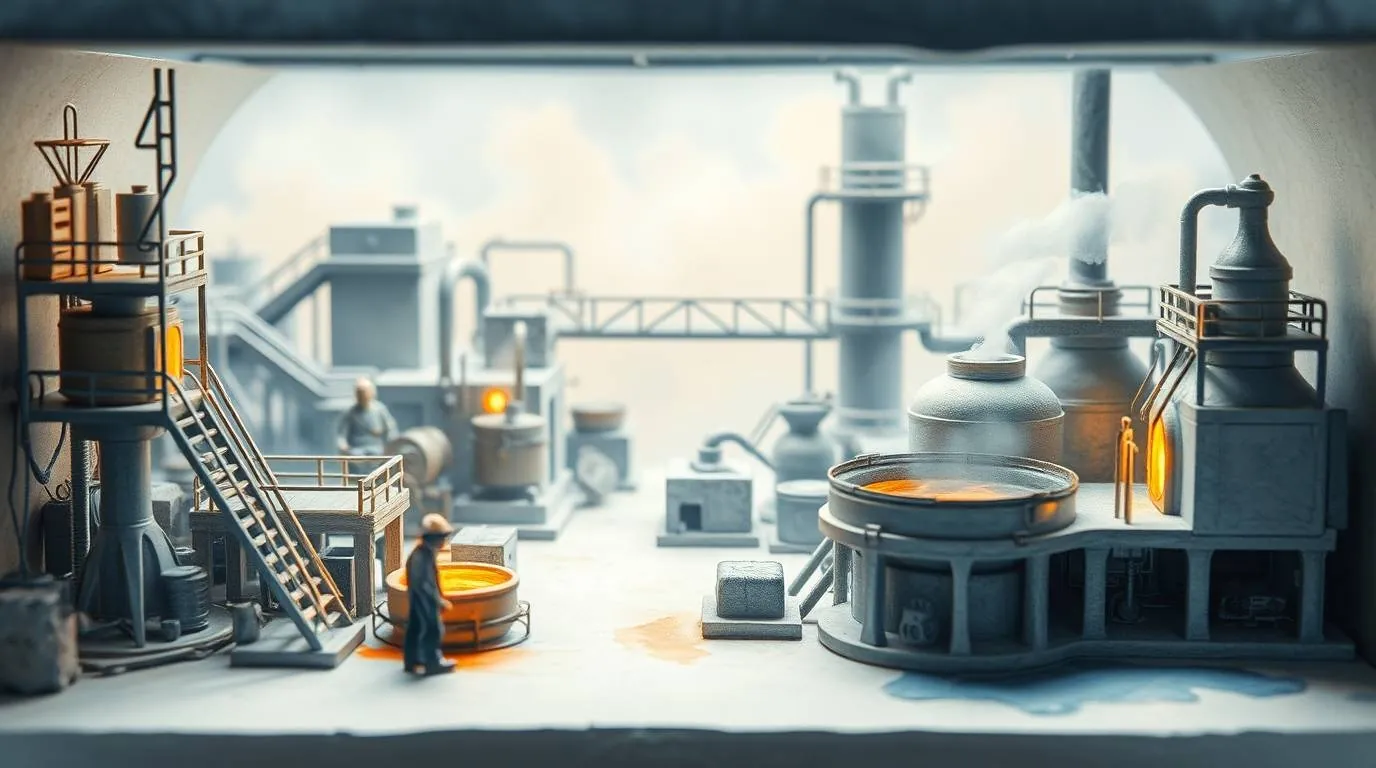
The scale is one of the first decisions in any scale model. It sets the level of detail and the final size. Get it wrong and the model ends up confusing or oversimplified. So think about it: do you want to show a whole plant, or a single pump? The answer drives the scale.
What scale means in a model
The scale of a model is the ratio between the model’s dimensions and those of the real object. It’s usually written as a ratio, for example 1:50, 1:100 or 1:200. The ratio tells you how many units in the real world each unit on the model stands for. At 1:100, for example, 1 centimetre on the model represents 100 centimetres (1 metre) in reality. Understanding that relationship is what makes the model an accurate and useful picture of the project.
How to choose the right scale
The right scale depends on several things:
- What the model is for: to show the detail of a single machine, a larger scale works better; to show a whole plant or production line in context, a smaller one.
- The size of the project: large projects need smaller scales to fit a reasonable space, while small ones can use larger scales to bring out detail.
- How much detail you want: the more detail, the larger the scale needs to be. Smaller scales limit how much can be shown clearly.
Choosing the scale is a bit like choosing the lens on a camera. It decides what is in focus and how the project comes across. A well-chosen scale brings out the project’s strengths and gets your idea across to the people looking at it.
Choose the materials
The materials matter too. Grabbing whatever is to hand won’t do: pick the materials that best represent your project and do justice to the work. A considered choice makes a real difference to the result.
Why material quality matters
Material quality has a direct effect on how the model looks and how long it lasts. Poor materials can spoil the result, with rough finishes and warping over time. Good materials give a professional, durable result. If you’re thinking of ordering 3D-printed scale models for events, material quality matters even more, because the model has to make a good impression on the public.
Logistics costs
Think about logistics and making the most of space
One thing that’s often overlooked when planning a scale model is the cost of transport and set-up, especially at events. Floor space at trade shows and exhibitions is expensive, so every centimetre of the booth has to earn its place. Here are some practical ways to cut costs and still make the project stand out.
Plan the model in modules
A model designed in modules is easier to transport, set up and store, and its parts can be taken apart and put back together without damage, which saves the team time on site. Whether it’s worth splitting a model, and where, depends on the piece.
Avoid oversized models
Big displays can be attractive, but they often aren’t practical. With floor space at events as expensive as it is, look for something compact that still tells the story. A well-planned modular model can get the whole project across without taking up precious square metres.
Don’t pull essential equipment out of your operation
Taking internal resources (such as your own 3D printers or cutting equipment) away from their normal work just for an event can cost more than it seems. Hiring specialists keeps your operation running as usual and gives you a more professional result.
Show the whole picture
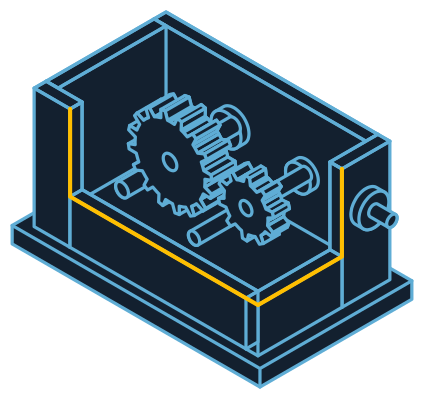
A well-planned model with removable sections, clear visual cues and the right lighting can convey the whole project better than a stack of images or loose renders. Use layers, cutaways and moving parts to tell the project’s story clearly.
Final thoughts
A scale model can be a good investment, as long as you have a clear plan and follow the right steps. Set the goal, choose the scale and pick the right materials, and the model will represent the project well and earn back what it cost. Material quality and attention to detail make the difference, so give the model the time and budget it needs to do its job.