The costs and benefits of 3D printing
Where 3D printing saves cost and time in industry: faster prototyping, end-use parts, custom tools and jigs, and the part it plays in Industry 4.0.
 By Tesseract 3D MarketingPublished on 5 min read
In 30 seconds
- With no mould or dedicated tooling, a prototype comes out faster and cheaper.
- 3D printing also makes end-use parts and custom tools for the production line.
- Engineers use printed models for scale models and to validate new parts.
In this article
- Key points on the costs and benefits of 3D printing
- Advantages of 3D printing in the automotive industry
- How 3D printing affects different industrial sectors
- 3D printing and Industry 4.0
- Cost and efficiency benefits of 3D printing
- Sectors that benefit from 3D printing
- The future of 3D printing in industry
- Conclusion
- Frequently asked questions
3D printing has changed how a lot of industrial companies work, mostly by making parts cheaper and quicker to get. This article looks at how the technology is used across industry, where it pays off most and where it is heading.
Key points on the costs and benefits of 3D printing
- 3D printing shortens prototyping cycles and gives more control over the design process, which leads to better products.
- Product development, industrial engineering and healthcare already rely on it.
- It is one of the core technologies of Industry 4.0, working alongside automation and other digital tools.
- On cost and efficiency, it lowers production cost, saves time and can be used in many different ways.
- Its future brings new uses and new markets, along with some problems still to solve.
Advantages of 3D printing in the automotive industry
Shorter prototyping cycles
3D printing has opened up new ways to make and customise vehicle parts. Because complex parts can be produced quickly, each prototyping cycle gets much shorter, and the design can be adjusted while the project is still moving.
More control over the design process
3D printing gives engineers a level of control over part design that tooling never did. They can try complex designs without paying for a mould first, and that encourages them to experiment and to customise.
Lower operating costs
Making parts on demand, with less waste, brings operating costs down noticeably. 3D printing can also produce lighter parts, which helps a vehicle’s energy efficiency and reduces its environmental impact.
How 3D printing affects different industrial sectors
3D printing has changed the way companies work in many sectors, with real gains in efficiency and in the freedom to try new designs.
Prototype development
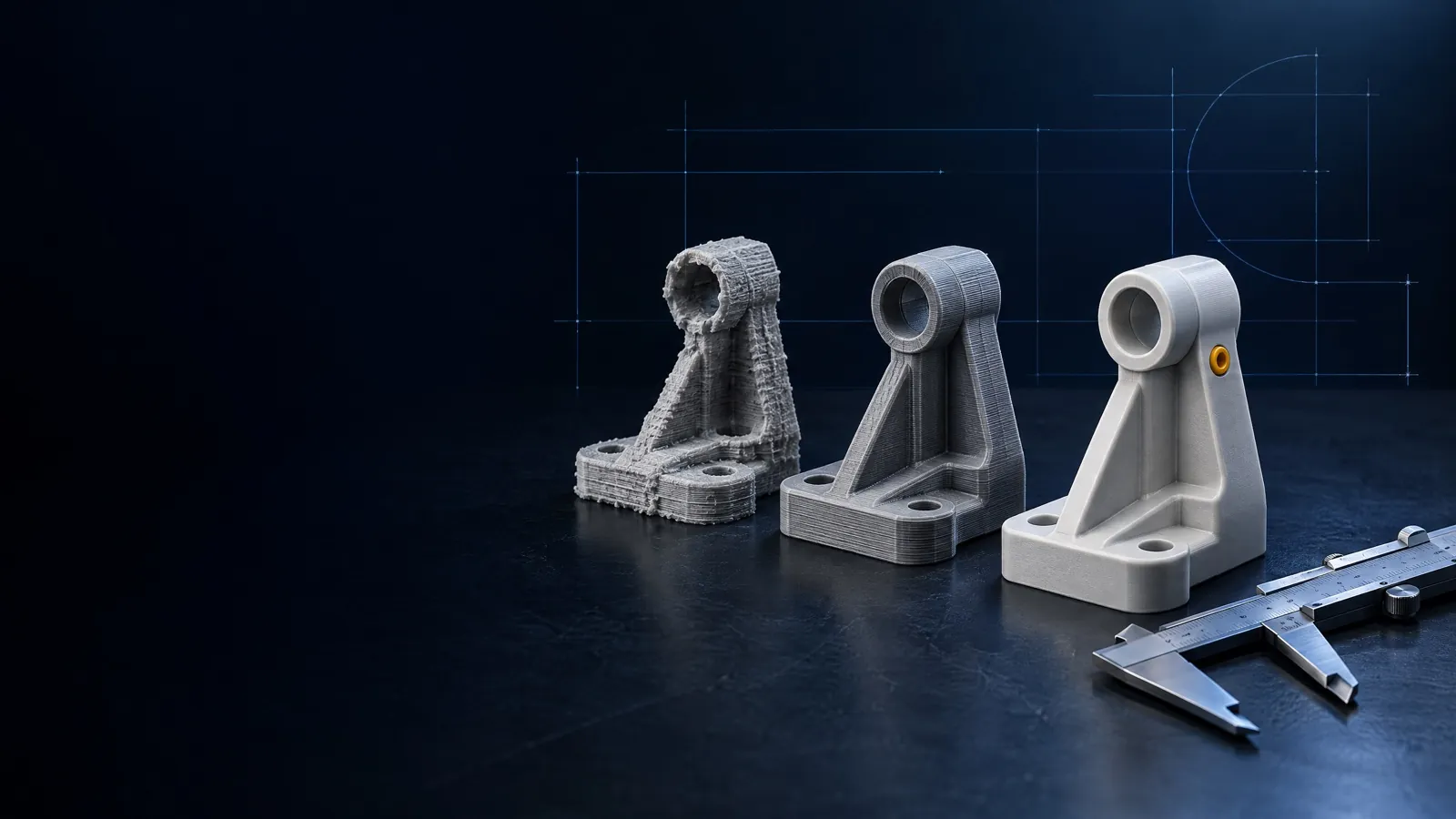
Being able to make accurate, detailed prototypes quickly is one of the biggest advantages of 3D printing. Each iteration takes less time, and product development becomes more efficient.
End-use parts
3D printing isn’t limited to prototypes. It also makes end-use parts that go straight into the final product, which cuts both production time and the cost that comes with it.
Specialised tools
The technology makes custom tools and components adapted to a specific need, such as a jig, a fixture or a guide for one operation. That makes the line more efficient and reduces downtime.
Want to know what drives the cost of your part?
Send the 3D file, or photos and measurements. The technical analysis comes back with the process, the material and the lead time.
3D printing and Industry 4.0
3D printing is one of the core technologies of Industry 4.0. It supports new product ideas through fast prototyping and customisation, and because it works straight from a digital file, it fits naturally with the other digital technologies of a modern plant. The result is more efficient automation and more agile production.
Cost and efficiency benefits of 3D printing
Lower production costs
3D printing can bring production costs down, especially for prototypes. Without dedicated tooling and moulds, a company saves on the upfront spend and on every adjustment that follows.
Time saved
3D printing works well for companies that run many different parts on the production line. When a part is missing, it can be printed without going through the paperwork of a conventional supplier. It’s a quick and inexpensive way to restock, and it saves real time in production.
Many uses
3D printing keeps finding more room in industry. Prototypes, end-use parts, specialised and one-off tools: in each case the printers save time and production cost. That is why the technology has spread so widely in recent years and changed so many industrial processes.
Sectors that benefit from 3D printing
3D printing has changed how several sectors work, with tangible benefits in customisation and cost.
Healthcare
In healthcare, 3D printing makes custom prostheses and anatomical models for planning surgery.
Product development
Because 3D printing is so flexible, product development teams can move fast, testing prototypes and making changes as they go. The development cycle gets shorter and prototyping costs far less than with traditional methods.
Industry
Industrial engineers in every segment use 3D models to make scale models of their equipment or to validate a new part. Both save time and money.
The future of 3D printing in industry
Emerging trends
3D printing keeps evolving, with new technologies and materials coming out all the time. Combined with artificial intelligence and robotics, it should make manufacturing faster and more precise.
Challenges and opportunities
The sector still needs clearer standards, and supply chains have to adapt to it. The opportunities are large, though, especially in automotive, aerospace and healthcare, where custom and complex parts are worth the most.
Adoption in new markets
Growth depends on reaching new markets. More and more developing countries are seeing what the technology can do, and that brings new uses in many areas.
Conclusion
3D printing has changed industry in practical ways: shorter prototyping cycles, more control over design and lower operating costs. It works in many sectors, from product development to production itself. As the technology improves, it will become even more common and a standard tool of Industry 4.0. If you want to know what a printed part would cost in your case, send us the file and we’ll walk you through it.
Frequently asked questions
What are the main advantages of 3D printing in the automotive industry?
Shorter prototyping cycles, more control over the design process and lower operating costs.
How does 3D printing affect different industrial sectors?
It speeds up prototype development and also makes end-use parts and specialised tools, which saves time and production cost.
What role does 3D printing play in Industry 4.0?
It works directly from digital files, so it fits alongside automation and the other digital technologies of a modern plant.
What are the cost and efficiency benefits of 3D printing?
It lowers production cost, shortens product development time and can be used in many different parts of a business.
Which sectors gain the most from 3D printing?
Product development and industrial engineering, which use it for prototypes, part validation and scale models. Healthcare is another large user, for custom devices and anatomical models.
What are the future trends for 3D printing in industry?
Wider adoption in new markets, new materials and machines, and a few open problems to solve, such as clearer standards and supply chains that are ready for it.